
Showing posts with label PreK Rhythm. Show all posts
Showing posts with label PreK Rhythm. Show all posts
Thursday, August 14, 2014
Preschool Rhythm Activity Video
When I posted two weeks ago on rhythm activities for preschoolers and toddlers, you might have read it... or you might have been like, "tl;dr". In case you fall into the latter category, I thought I'd show you a little video Gummy and I made of just one of the activities. This is the one where we add percussion sounds to a story. You might be interested to see how it works out with a two-year-old in real life.
Wednesday, July 30, 2014
It's All About the Beat: Rhythm for Toddlers and Preschoolers
 |
|
|

A favorite milestone of many parents is when their baby starts to dance. Just take a look at Instagram's #toddlerdance for evidence and a good laugh. I remember all the attention Gummy used to get when we'd go to outdoor concerts. "Who taught him those moves?" people would ask. "Well, it wasn't me," I'd say and look in my husband's direction. I liked to pretend our son got his moves from his dad (mostly because imagining my husband dancing like that made me snicker), but really, neither of us danced anything like our energetic toddler. I secretly hoped his dancing was a sign of musical genius, or at least an indication that my son was learning something from me. But as it turns out, all babies are wired to dance.
Yes, a fun piece of research from the University of York clear back in 2010 found that we humans are born to respond to music, and rhythm specifically, it seems. My favorite observation from the research was this: "Strikingly, the more the infants were moving in time with the beat, the more they smiled."
But babies don't move naturally in time with the beat. They seem driven to, but it takes coordination, experience, and practice. That is what the preschool years of developing rhythm are all about.
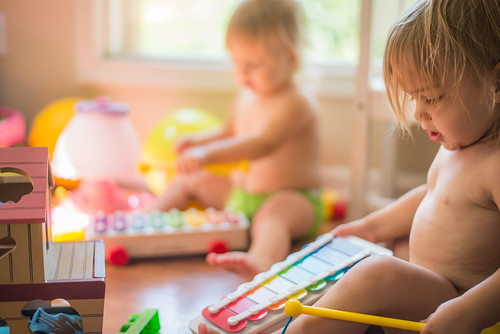
Just as they differ developmentally, toddlers and preschoolers have a huge range of abilities when it comes to anything musical. They also differ in their ability to follow directions. Because of this, most experts recommend musical play for this age group. Here are some guiding principles for musical play with your children.
Steady Beat. At this age, don't worry about teaching specific rhythms. Preschoolers really just need a sense of steady beat. Young children respond most accurately to quick tempos, around 120-130 beats per minute. Tempo refers to the speed of the beat. Here is an online metronome if you'd like to know how fast that is. You want your child to be able to keep a beat at all tempos, but you can use this as a starting point. Also, if you sense your child disengaging quickly from music, try turning up the beat (tempo, not volume).
Movement through time and space. In order to move to a steady beat, children need to develop a sense of the energy required to move through a certain space within a given time. Whether they are moving their whole bodies or using a stick to hit a drum, this applies.
Cause & Effect. Toddlers are pretty much exploring this idea 24/7. It relates to the principle above, but is especially useful to guiding activities with percussion instruments or other play props. Preschoolers will need to experiment with the cause and effect of sound, energy in motion, and social responses to music.
 |

Moving to music
- Listen and keep a beat somewhere on your body. This could include bouncing up and down, patting your knees (with both hands moving together), or swaying from side to side.
- Play freeze dance. When the music goes off, everyone stop. It's a listening exercise!
- Dance to music with instructions. Use music where the choreography is sung in the lyrics (like the "Hokey Pokey" and "If You're Happy and You Know It"). This gives kids more practice with active listening, even if they aren't right on beat.
- Listen to music and count beats with or without numbers. How do you count without numbers? Use random words or movements. If you can tell that the beats of a song are organized into groups of four (we call the organization of beats meter), invent four simple movements to keep track of the four beats or use one big movement for all four beats. You might touch your head, shoulders, knees, and toes over and over in the first case. An example of the second idea would be tracing a big circle with your arm for a period of four beats, then starting again for the next set of four beats.
- Play music or sing while giving children a chance to find the beat on a percussion instrument such as shakers, bells, rhythm sticks, or a tambourine.
- Use instruments in place of hand claps and stomping to "If You're Happy and You Know It", "Bingo", and similar songs.
- Dance to music with scarves. As they watch the scarves move through the air, children can gain a sense of the time and energy between beats, especially at slower tempos.
- Pass or roll a ball from person to person following a beat. This will probably be above their level, but still fun as they try to coordinate their movements, the ball, and the pulse of the music.
- Read rhyming books with a very defined pulse.
- Read rhythmically and accent important words with your voice.
- Read and add an instrument to certain words or to the refrain. For example, if you're reading Al Perkin's Hand, Hand, Fingers, Thumb, every time you come to the "dum ditty dum" refrain, play it on an instrument. Another idea is to tell the story of the three little pigs and tap the rhythm to "I'll huff and I'll puff and I'll blow your house down" or "not by the hair of my chinny-chin-chin."
- Read with a super fast beat. Read with a super slow beat. Let your kids choose which one you do.
- Introduce symbolic music notation by playing instruments to coincide with illustrations. For example, as you read "The Very Hungry Caterpillar" tap one time for the day the caterpillar eats one apple, two times for the two pears, etc. This works really well with counting books that depict a certain number of items or animals for each number.
- Most of the reading ideas apply here too, but everything is done without visual cues. This is an important part of coordinating memory with the processes of doing. Have a favorite poem or rhyme? Have your preschooler memorize it and add creative sounds.
- Add a rhythmic transition for an activity you regularly do. Anything will work. You might say in rhythm while clapping, "It's time to eat, so let's keep a beat". Follow this up by clapping your hands to a steady beat all the way to the sink where you will wash for dinner.
- Songs like "Ring Around the Rosie", chants like "Motorboat", and games like "The Farmer in the Dell" require a lot of coordination for toddlers, but continue to be favorites. As they get older, they learn to walk on the beat in unison with other participants.
Social Rhythm
- When your toddler plays something on a percussion instrument, play the same thing back.
- After your toddler plays a pattern, play it back and add to it.
- Dance to your toddler's beat.
- Have a musical conversation. Take turns playing patterns. Don't worry if it's not in time. It's about the creative and social experience.
In case you were curious, this is how Gummy dances. I have about a million videos like this, but this one from last December is my favorite.

Monday, July 28, 2014
Baby's Got Rhythm: Developing Your Infant's Sense of Beat
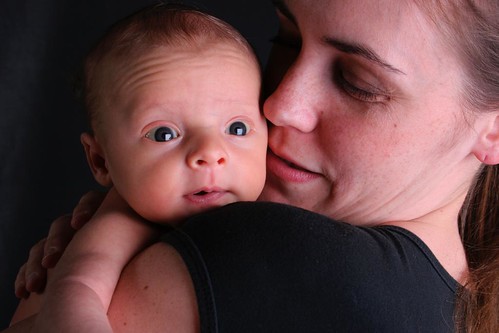
The mother-baby connection involves rhythm in so many ways. We start with hearing our mother's heart beat in utero, followed by an instinct for rhythmic sucking, and continuing in all the ways a mother comforts her child: bouncing, rocking, patting, swinging, dancing, etc. In their first few months, babies develop regular breathing, a sense for the rhythm of speech, and soon follow with coordinating motion to a beat when music is played. By the time my boys were four months old, they kicked one leg in a steady pulse to propel their bouncer. Doorway jumpers provided rhythmic play for my oldest, and the instinct to move to music seems inherent in every toddler I know.
How is it possible then, that something so innate seems lost in older children and adults? In most cases, I don't think this rhythmic sense is lost, but that it lacks internalization of the beat in a way that coordinates with movement. Some researchers believe the neural pathways for learning music are set within the first two years of life. As parents and teachers we can strengthen these pathways in a variety of ways. Here are some guidelines and activities to help you develop your child's sense of rhythm through the first 12-18 months.
Rhythmic Comfort. Comfort your baby in all the ways I mentioned before: bouncing, rocking, patting, swinging, and dancing with your baby. You will be doing this anyway, so add "practiced developing baby's sense of rhythm" to your done list each day. It's always nice to have extra things on that list.
Bouncing, Tapping, and Clapping Rhymes. Bouncing rhymes are great for developing rhythm and language. Before baby has good head control, carefully bounce her laying across your lap, or on her back with your arms supporting her head. When she is 3-4 months old and has good head control, she can sit up on your lap. You may be familiar with some bouncing rhymes. Here is one of my favorites from childhood:
Trot little horsey
Trot to town
Trot little horsey
Don't fall down.
There are a million variations on this, and they are fun for babies starting around four months old. They can sit up in your lap to bounce and drop down between your knees on the last line. Sometimes I delay the drop when I know they are expecting it just to get a bigger laugh. Here's another one I remember:
To market, to market
To buy a fat pig
Home again, home again
Jiggety-jig.
To market, to market
To buy a fat hog
Home again, home again
Jiggety-jog.
Dr. John Feierabend, a leading expert in children's music and movement development, collected rhymes like these through interviews. He found that 100 years ago families had a vast repertoire of rhymes and games meant to be played with a baby on your lap. Most of these have been lost over time, and our generation remembers only a few. His fascinating curriculum based on this discovery can be read about here. I highly recommend the read.
So, what are the rhymes that have survived? How about "This Little Piggy Went to Market"? Or "Pat-a-cake, pat-a-cake, baker's man"? Dr. Feierabend discusses and gives examples of more rhymes meant for wiggling fingers and toes, tapping & clapping, and tickling the baby in this sampler of his full collection. Here is another great pdf collection from a Pierce County Library System. It includes rhymes in English, Spanish, Russian, and Korean. Some of the lap games from this article at Today's Parent were familiar to me also.
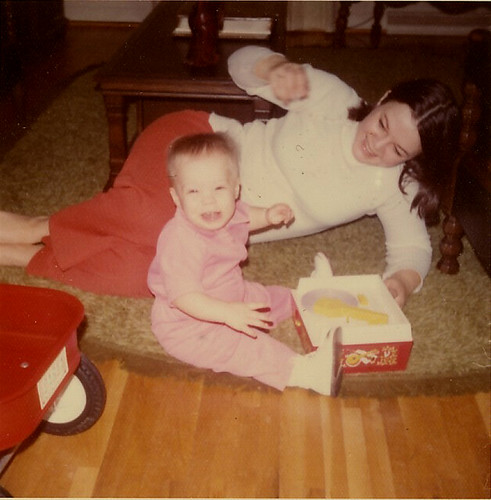
Sing to your baby. Sing simple songs. Sing songs you love. Sing lullabies. Sing even if you think you can't sing. Baby doesn't know the difference, but he needs needs to know that rhythm can be kept in the voice and in the body. As you sing, keep the rhythm as you sway, dance, or pat your little one.
Listen to music. A variety of rhythms is best. Dance while you listen. Dance with baby while you listen. Infants and toddlers can move more accurately to a quick beat than a slow one, so consider keeping it uptempo unless it's bedtime or naptime.
Play or sing to their beat. When baby is doing something rhythmic like bouncing himself in a chair or jumping in a doorway, sing or play a song (or chant a rhyme) to the beat they have set. If they stop moving, stop what you are doing until they continue. You could also do this while the baby is in a swing with a beat you set yourself.
As you do these activities with your baby, enjoy them! You'll have happy memories, and your child will develop not only a sense of rhythm, but language skills, and a stronger parent-child bond.
---
Do you have a favorite lap rhyme from childhood? Have more ideas on connecting babies with rhythm? I'd love to read them in the comments!
If you're interested in the science behind babies' perception of rhythm. Here are some links:
Newborn infants detect the beat in music - Proceedings of the National Academy of Sciences of the United States of America
Pregnancy and Baby summary of the research
USA Today summary of the research
How is it possible then, that something so innate seems lost in older children and adults? In most cases, I don't think this rhythmic sense is lost, but that it lacks internalization of the beat in a way that coordinates with movement. Some researchers believe the neural pathways for learning music are set within the first two years of life. As parents and teachers we can strengthen these pathways in a variety of ways. Here are some guidelines and activities to help you develop your child's sense of rhythm through the first 12-18 months.
Rhythmic Comfort. Comfort your baby in all the ways I mentioned before: bouncing, rocking, patting, swinging, and dancing with your baby. You will be doing this anyway, so add "practiced developing baby's sense of rhythm" to your done list each day. It's always nice to have extra things on that list.
Bouncing, Tapping, and Clapping Rhymes. Bouncing rhymes are great for developing rhythm and language. Before baby has good head control, carefully bounce her laying across your lap, or on her back with your arms supporting her head. When she is 3-4 months old and has good head control, she can sit up on your lap. You may be familiar with some bouncing rhymes. Here is one of my favorites from childhood:
Trot little horsey
Trot to town
Trot little horsey
Don't fall down.
There are a million variations on this, and they are fun for babies starting around four months old. They can sit up in your lap to bounce and drop down between your knees on the last line. Sometimes I delay the drop when I know they are expecting it just to get a bigger laugh. Here's another one I remember:
To market, to market
To buy a fat pig
Home again, home again
Jiggety-jig.
To market, to market
To buy a fat hog
Home again, home again
Jiggety-jog.
Dr. John Feierabend, a leading expert in children's music and movement development, collected rhymes like these through interviews. He found that 100 years ago families had a vast repertoire of rhymes and games meant to be played with a baby on your lap. Most of these have been lost over time, and our generation remembers only a few. His fascinating curriculum based on this discovery can be read about here. I highly recommend the read.
So, what are the rhymes that have survived? How about "This Little Piggy Went to Market"? Or "Pat-a-cake, pat-a-cake, baker's man"? Dr. Feierabend discusses and gives examples of more rhymes meant for wiggling fingers and toes, tapping & clapping, and tickling the baby in this sampler of his full collection. Here is another great pdf collection from a Pierce County Library System. It includes rhymes in English, Spanish, Russian, and Korean. Some of the lap games from this article at Today's Parent were familiar to me also.

Sing to your baby. Sing simple songs. Sing songs you love. Sing lullabies. Sing even if you think you can't sing. Baby doesn't know the difference, but he needs needs to know that rhythm can be kept in the voice and in the body. As you sing, keep the rhythm as you sway, dance, or pat your little one.
Listen to music. A variety of rhythms is best. Dance while you listen. Dance with baby while you listen. Infants and toddlers can move more accurately to a quick beat than a slow one, so consider keeping it uptempo unless it's bedtime or naptime.
Play or sing to their beat. When baby is doing something rhythmic like bouncing himself in a chair or jumping in a doorway, sing or play a song (or chant a rhyme) to the beat they have set. If they stop moving, stop what you are doing until they continue. You could also do this while the baby is in a swing with a beat you set yourself.
As you do these activities with your baby, enjoy them! You'll have happy memories, and your child will develop not only a sense of rhythm, but language skills, and a stronger parent-child bond.
---
Do you have a favorite lap rhyme from childhood? Have more ideas on connecting babies with rhythm? I'd love to read them in the comments!
If you're interested in the science behind babies' perception of rhythm. Here are some links:
Newborn infants detect the beat in music - Proceedings of the National Academy of Sciences of the United States of America
Pregnancy and Baby summary of the research
USA Today summary of the research
Subscribe to:
Posts (Atom)
